Past events
Full listing
1:00 PM PST|3:00 PM CST|4:00 PM EST
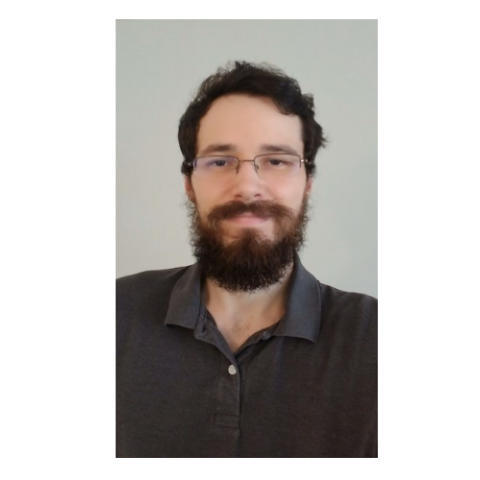
Speaker: Brian Schaap, UCLA
Host: Philippe Piot
Abstract: Inverse Compton scattering by relativistic electrons off intense laser pulses is becoming an increasingly prevalent compact source of tunable radiation in X-ray spectral range. The brightness of typical Compton sources, unfortunately, remains small compared to large scale facilities. The Compton brightness can be enhanced significantly via a shallow angle scattering geometry and superradiant emission from a density modulated electron beam, which are shown to be complementary methods via the use of inverse free electron laser microbunching. Furthermore, we will discuss our experimental efforts towards the observation of superradiant Compton scattering at the UCLA Pegasus laboratory, including diagnostics of strongly compressed electron bunches -such as longitudinal phase space tomography, electro-optic sampling, and THz streaking- and the recent demonstration of shallow angle Compton scattering.
Visitors: Those from outside Argonne who wish to attend in person must contact accelerator@anl.gov to arrange a gate pass.
Title: Advanced Temporal and Phase-Space Diagnostics for X-ray Free-Electron Lasers
Host: Nathan Sitaraman
Abstract: Precise characterization of electron and photon beams is vital for advancing the performance and scientific capabilities of X-ray free-electron lasers (XFELs). In this seminar, we present recent breakthroughs in time-resolved diagnostics and phase-space reconstruction techniques for XFEL applications. First, we discuss attosecond-resolution measurements enabled by a variable polarization X-band radiofrequency transverse deflecting structure (TDS) at SwissFEL’s Athos beamline, which allow full reconstruction of FEL power profiles with pulse durations as short as 300 attoseconds. Second, we introduce a novel approach for five-dimensional (5D) phase-space tomography, experimentally demonstrated at FLASHForward and later applied at SwissFEL, offering comprehensive insight into the spatial and momentum distributions of GeV-class electron beams. Finally, we explore a self-synchronized, cost-effective diagnostic method using wakefield streaking in corrugated structures, achieving femtosecond temporal resolution without active synchronization. Together, these techniques represent a significant leap forward in ultrafast beam diagnostics, enabling new levels of control and optimization for current and future XFEL facilities.
Title 1: Designing and Commissioning an EDX System
Speaker: Tushya Kalpada
Title 2: The Pinhole Scan Technique with a 200kV DC Cryo Electron Gun
Speaker: John Anawalt
Title: Computational Modeling of Magnetic Field Interaction with Superconductors Under High-Field and High-Dissipation Conditions: A TDGL Approach Applied to Nb and Nb3Sn
Abstract: Superconducting radiofrequency (SRF) cavities are essential components in modern particle accelerators, enabling the efficient acceleration of charged particles for various applications in physics, medicine, materials science, and beyond. The performance of these cavities is significantly influenced by the properties of superconducting materials, such as niobium (Nb) and triniobium-tin (Nb\textsubscript{3}Sn), and the defects and surface features present within the material. This dissertation presents a computational study focused on understanding the behavior of SRF cavities, using a sample-specific time-dependent Ginzburg-Landau (TDGL) framework to simulate their performance under realistic material conditions. The research integrates experimental data and density functional theory (DFT) calculations to model the impact of various defects, including hydrides, Sn-deficient islands, grain boundaries, and surface roughness. The calculations reveal how these defects contribute to performance degradation, particularly in terms of dissipation and quality factor ($Q$). We also investigate the impact of surface layers and roughness on the behavior of Nb\textsubscript{3}Sn, finding that surface features play a significant role in influencing cavity performance. In addition, the dissertation explores the generalized TDGL (GTDGL) model, which offers an extension to traditional TDGL theory and enables improved predictions of frequency-dependent phenomena. This work contributes to the development of more accurate computational tools for analyzing SRF cavity performance, providing insights that can guide future efforts in material optimization and accelerator technology.
Speaker: IPAC is this week – we can still meet.
Speaker: Peter Owusu